Case studies · Processing caked raw materials
Reprocessing 70 tonnes of caked glycine and reusing the original manufacturer’s bags
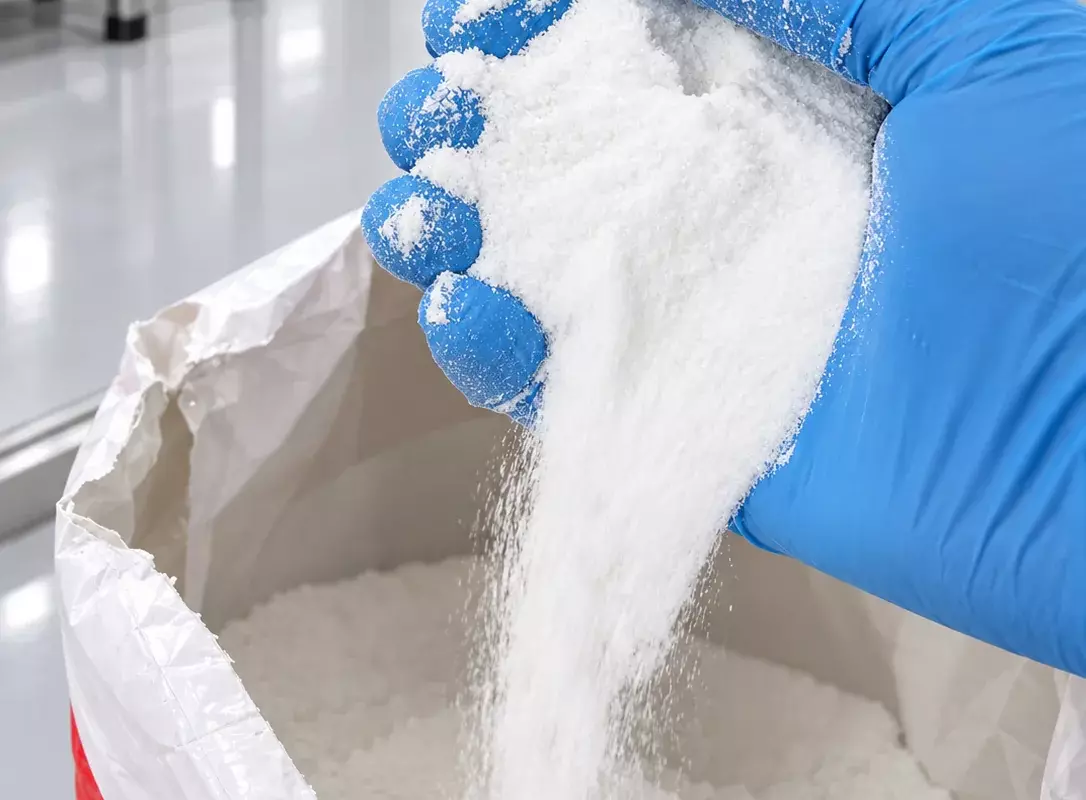
We reprocessed a 70-tonne batch of caked glycine: first breaking up the dense blocks, then progressively reducing the fragments and restoring flowability. We subsequently repacked the product into the retained manufacturer’s bags in 25 kg quantities and prepared the pallets for dispatch to the customer.
- Raw material
- Glycine
- Batch quantity
- 70 tonnes
- Pack size
- 25 kg
The customer’s task
The customer needed to reprocess 70 tonnes of glycine that had lost its flowability during sea transport. According to the description of the received batch, the product had been exposed to moisture and caked into a dense solid mass.
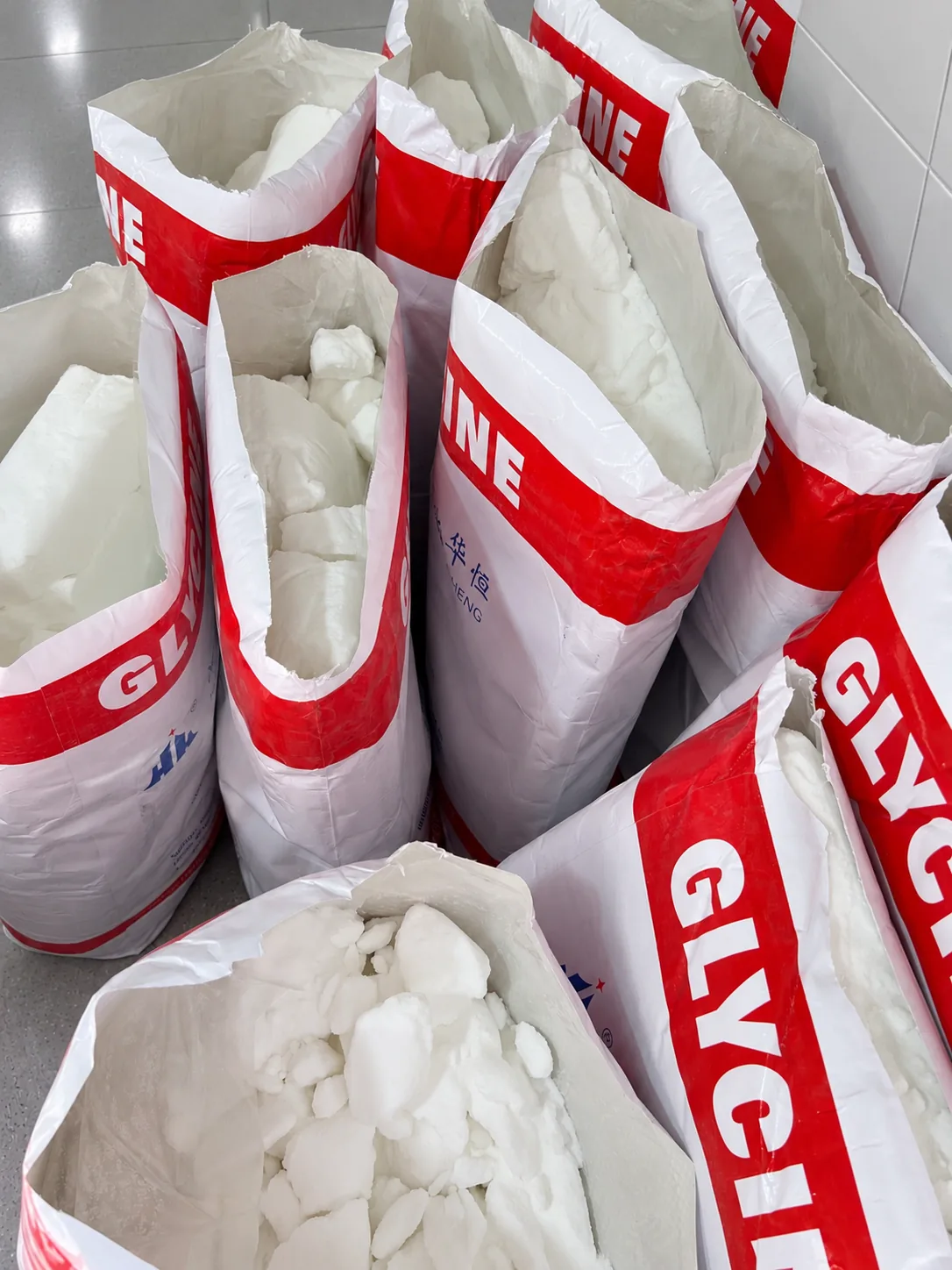
When the raw material arrived, we assessed its physical condition. The glycine inside the bags had formed dense blocks: ordinary loosening was not enough. A sequence of processing stages was needed to prepare the raw material for further size reduction.
Moisture and storage conditions can cause powders to cake. Our article “Caked powder: restoring flowability and saleable condition” explains the causes and the checks needed before reprocessing.
An additional requirement: retain the manufacturer’s bags
The customer asked us to retain as much of the manufacturer’s original packaging as possible and repack the glycine into the same bags after size reduction. The task involved restoring the product’s saleable condition and retaining the packaging with its original manufacturer’s labelling.
We therefore chose staged processing. First, the solid blocks had to be broken up inside the bags; the prepared fragments could then pass through subsequent size reduction stages.
Preliminary coarse crushing inside the bags
Vibratory equipment was used for the first processing stage. It enabled preliminary breaking of the dense material directly inside the manufacturer’s bags. The aim was to obtain smaller fragments while retaining the packaging for repacking.
After preliminary crushing, the glycine consisted of coarse fragments that could be handled at the next stage. Only the initial breaking of the solid blocks took place inside the bags; further size reduction was performed on industrial equipment.
Further size reduction and restoration of flowability
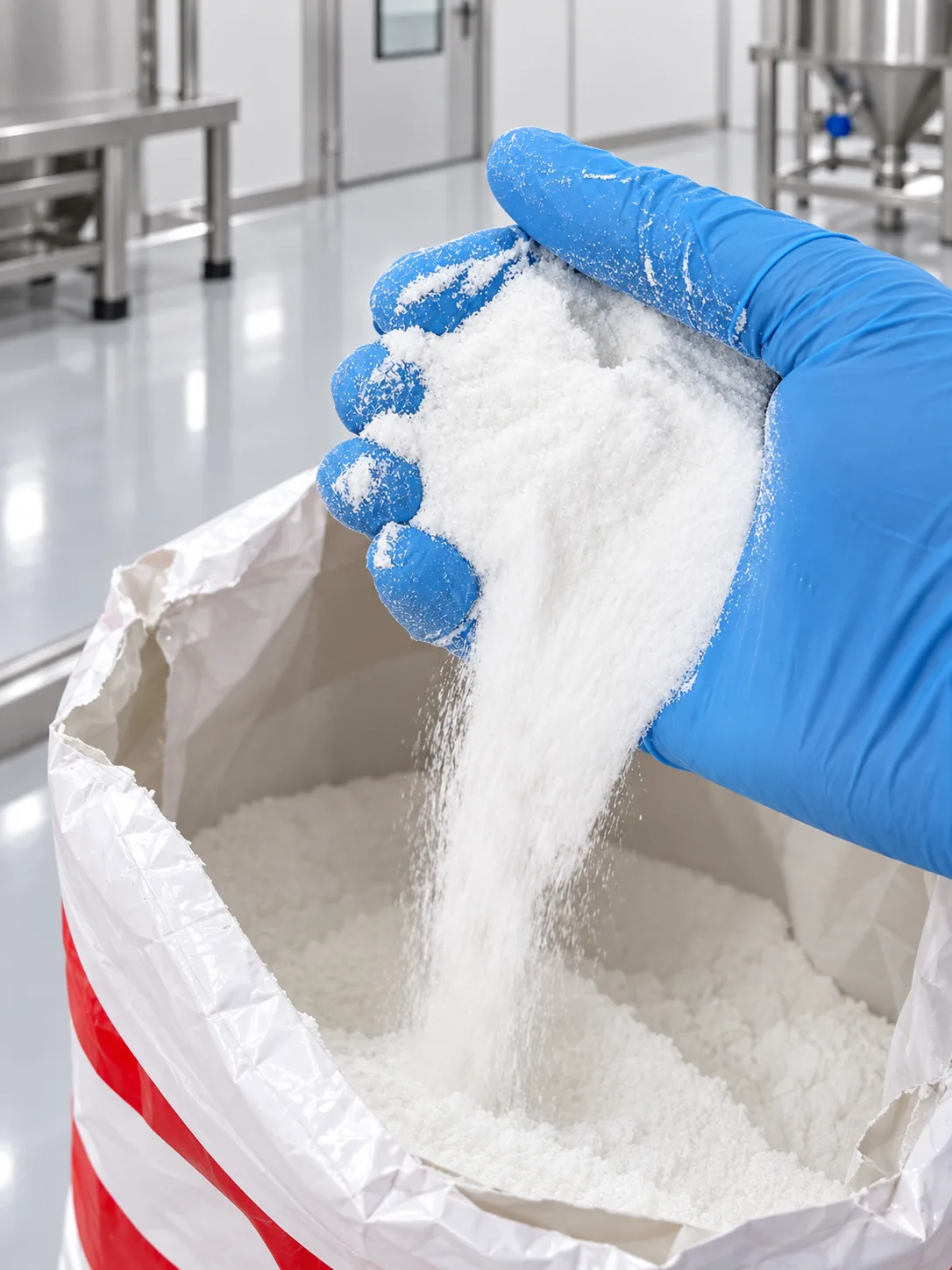
The coarse fragments were progressively reduced to the required particle size. Staged reduction restored a uniform, free-flowing physical structure to the glycine.
The processing sequence was selected to suit the glycine’s physical condition and the customer’s requirements for the result.
Repacking into 25 kg bags
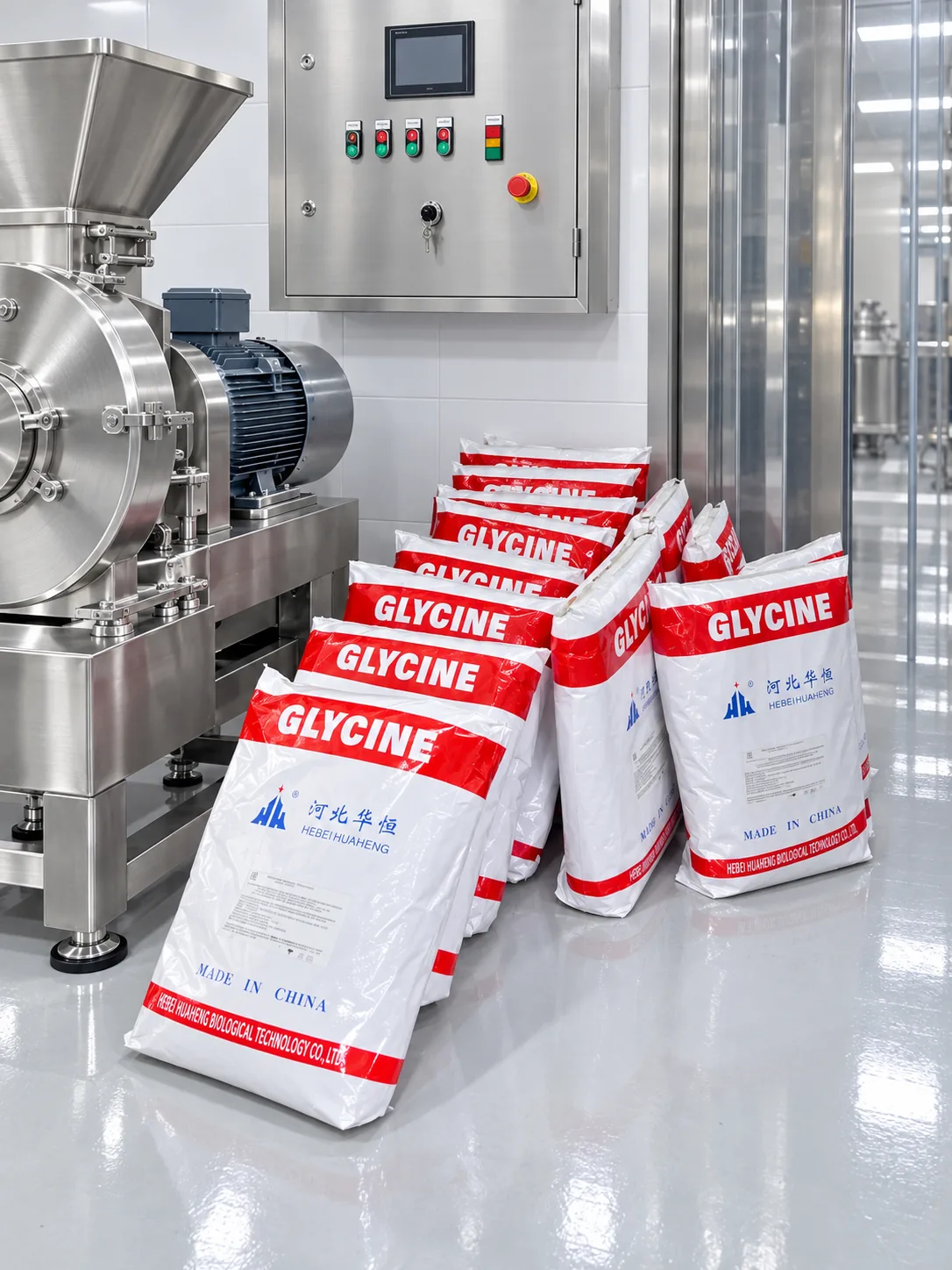
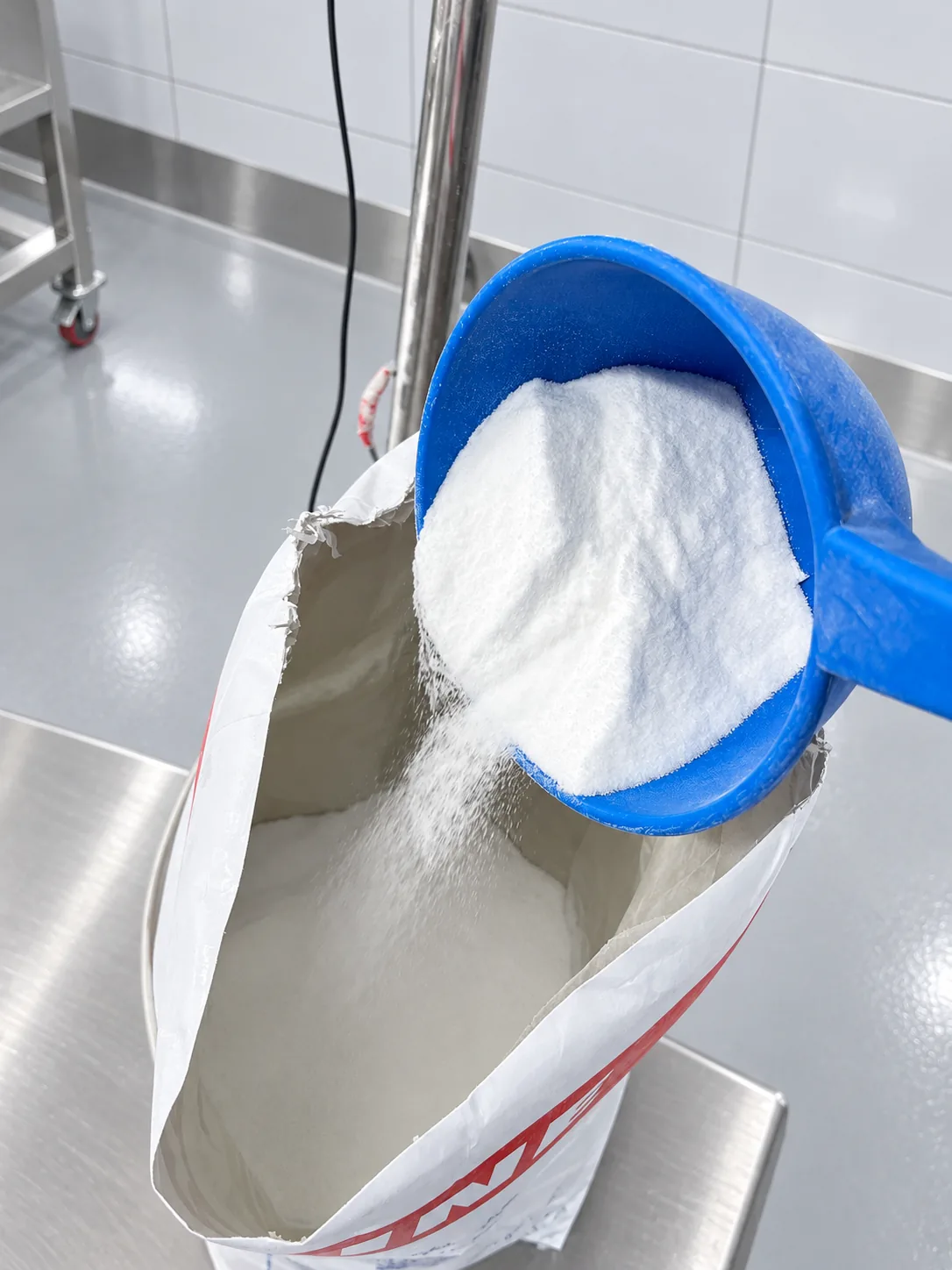
After size reduction, the product moved to the packing area. We measured the glycine into 25 kg quantities and filled the retained original manufacturer’s bags. The bags were then closed and stitched using industrial bag-closing equipment.
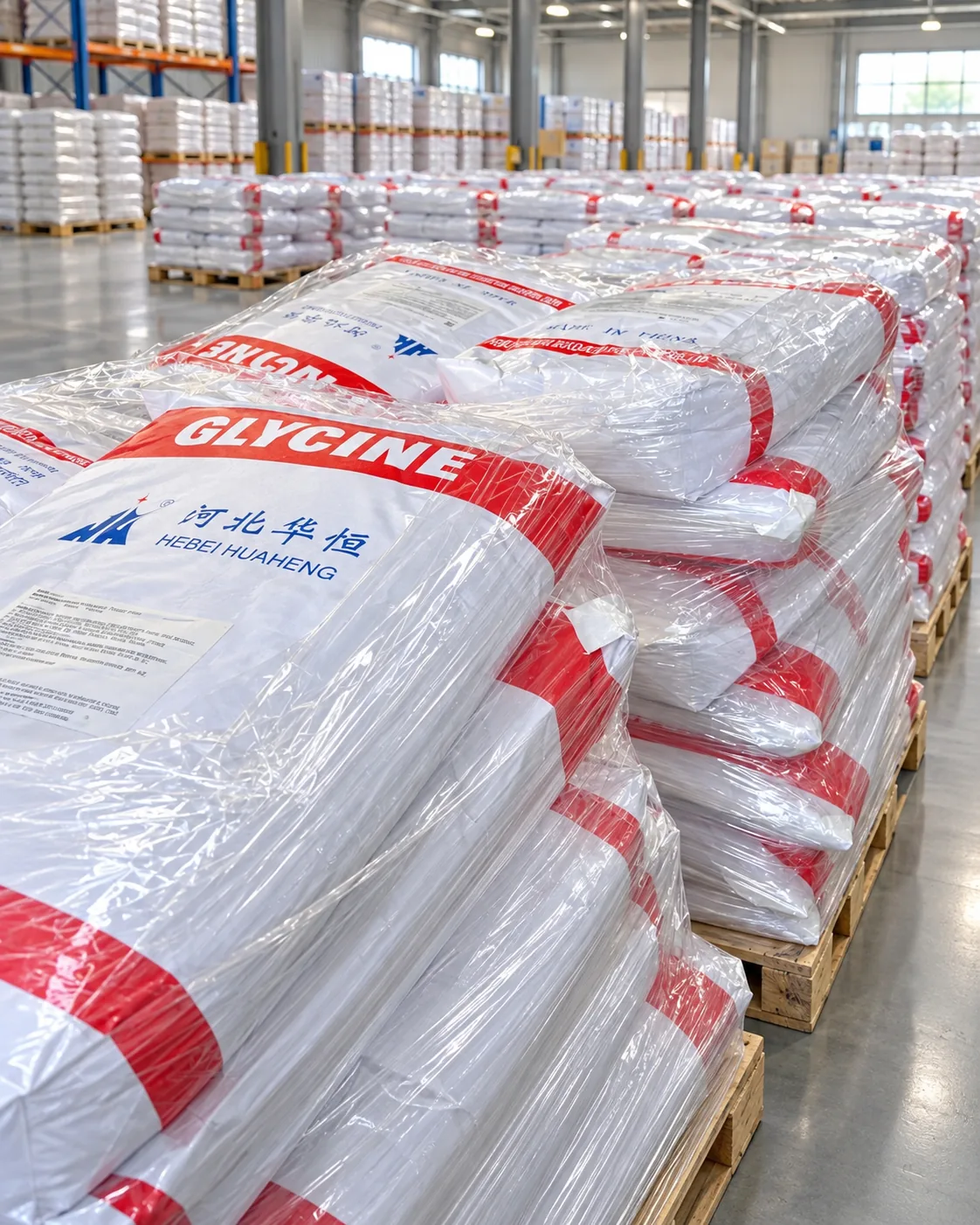
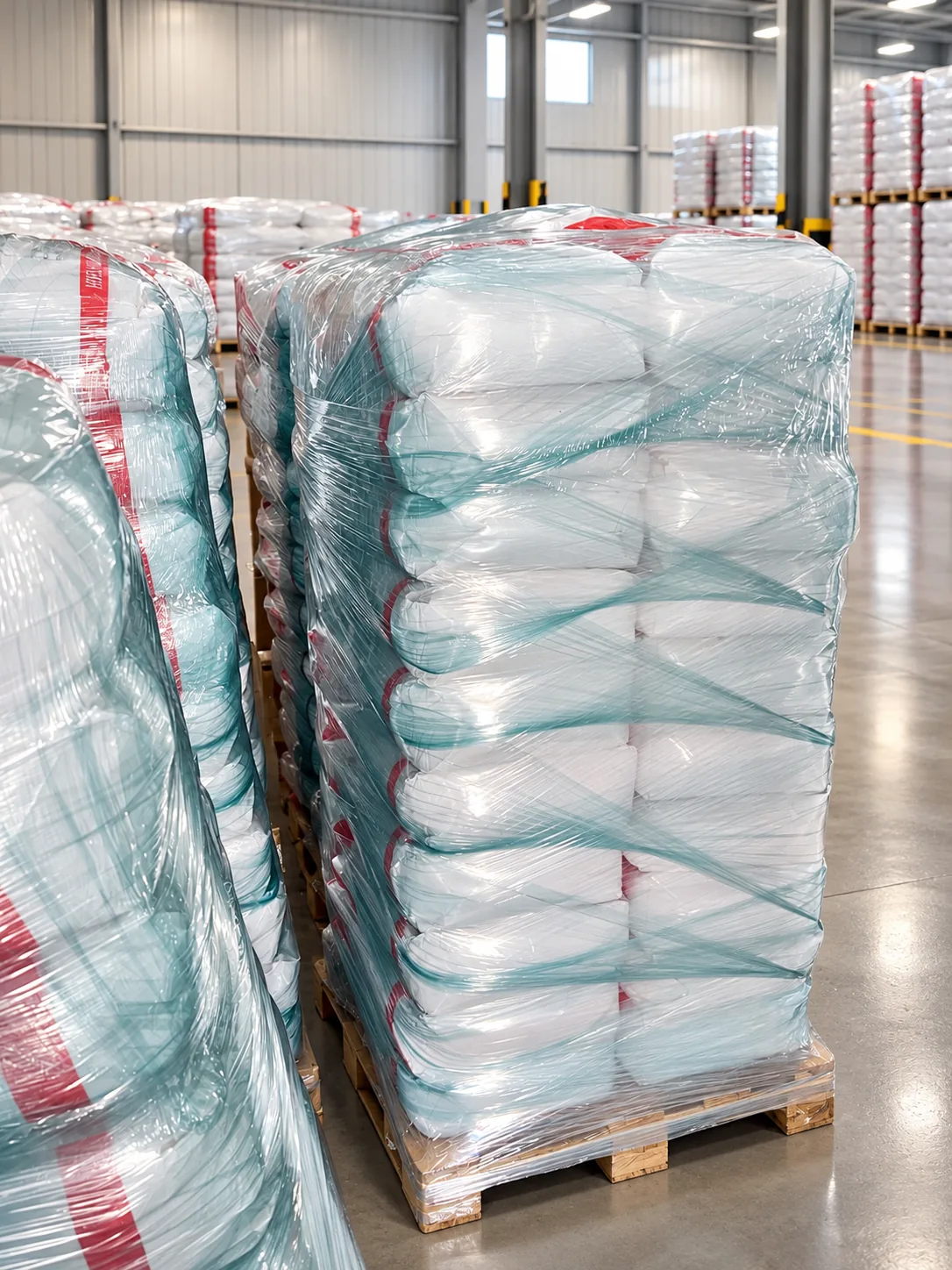
The packed product was placed on pallets and prepared for dispatch. The original manufacturer’s labelling remained on the retained bags.
The result of reprocessing
- A 70-tonne batch of glycine was reprocessed.
- The caked solid blocks were broken up, restoring the product’s free-flowing physical structure.
- The glycine was repacked into 25 kg quantities in the retained manufacturer’s bags.
- Its saleable condition was restored and the pallets were prepared for dispatch to the customer.
70 tonnes is the batch quantity for this project. The timing and conditions for reprocessing another batch are discussed separately, taking account of the raw material’s properties and the customer’s requirements.
The result concerns the glycine’s physical condition and flowability. Size reduction alone does not confirm chemical purity, safety or conformity with the original specification and does not extend shelf life. Laboratory reports for this batch are not published in this case study.
Gallery of processing stages
The collection includes photographs and process illustrations. The images show stages of the work and do not independently establish product quality. Select a thumbnail to enlarge the image and move to the next one.


Discuss reprocessing your batch
If your raw material has caked, describe its condition, batch quantity, required particle size and repacking requirements. If retaining the bags is important, mention this in your enquiry. We will assess whether reprocessing is possible and discuss the processing stages, timing and cost for your task.
See our service for restoring the flowability of caked products and what to specify in a toll processing agreement, then request a quote.
This case study was prepared from the description of completed work and visual materials supplied by the company.